
Your whole rig.
In your pocket.
AmpHoarder plays NAM amp captures and impulse responses from the TONE3000 catalogue, live on Android, through its own USB audio code: 7.08 ms from string to speaker on a current flagship Android phone. Stomp between rigs with a foot controller. Every feature is free.
- 7.08msRound trip over USB on a flagship Android phone
- 16Positions in one rig
- 4Full A2 captures at once on a Snapdragon 8 Elite
- 24Built-in effects
- 35Demo tracks to play your rig with
- FreeEvery feature, in every build
Android, at seven milliseconds.
Low-latency guitar on a phone has mostly been an iPhone story. Android's standard audio path takes 18 to 21 ms from string to speaker, and you feel every one. AmpHoarder goes around it: its own USB audio code talks to your interface directly, and a current flagship Android phone plays back in 7.08 ms.
- Its own USB audio host. Isochronous USB transfers and USB Audio 2.0, written for AmpHoarder, in place of Android's audio stack.
- On by default. Plug in a class-compliant USB interface and play.
- A safe fallback. When Direct USB is off, standard Android audio takes over.
- Interface
- Android audio system
- App
- Interface
- AmpHoarder’s own USB host
- App
Round trip, median of measurements at 48 kHz with 48-frame callbacks; Direct USB ran 7.0 to 9.1 ms across stream starts.
The studio plugin, on a phone.
A reference test on every build holds the engine to the official NAM plugin: 122 to 157 dB of agreement on WaveNet captures. A capture sounds on your phone the way it sounds in a studio.
- NAM A1 Standard · Lite · Feather · Nano
- NAM A2 Full · Light
- LSTM 1x16 · 2x8
- Cab IRs to 4,096 taps, 8–192 kHz
- Space IRs to 10 s
- Stereo out, dual mono in
A2 runs on TONE3000's generated engine at about half the CPU of the older one. Each capture's own latency is measured at load, so Mix lines up.
Four full captures, running at once.
Full A2 is the most accurate capture NAM makes, and it scored highest in the listening test. A current flagship Android phone plays four of them together in one rig, with room to spare. Building a bigger rig? Light captures cost about a fifth as much, so a rig can hold up to 16.
Hear it before you keep it.
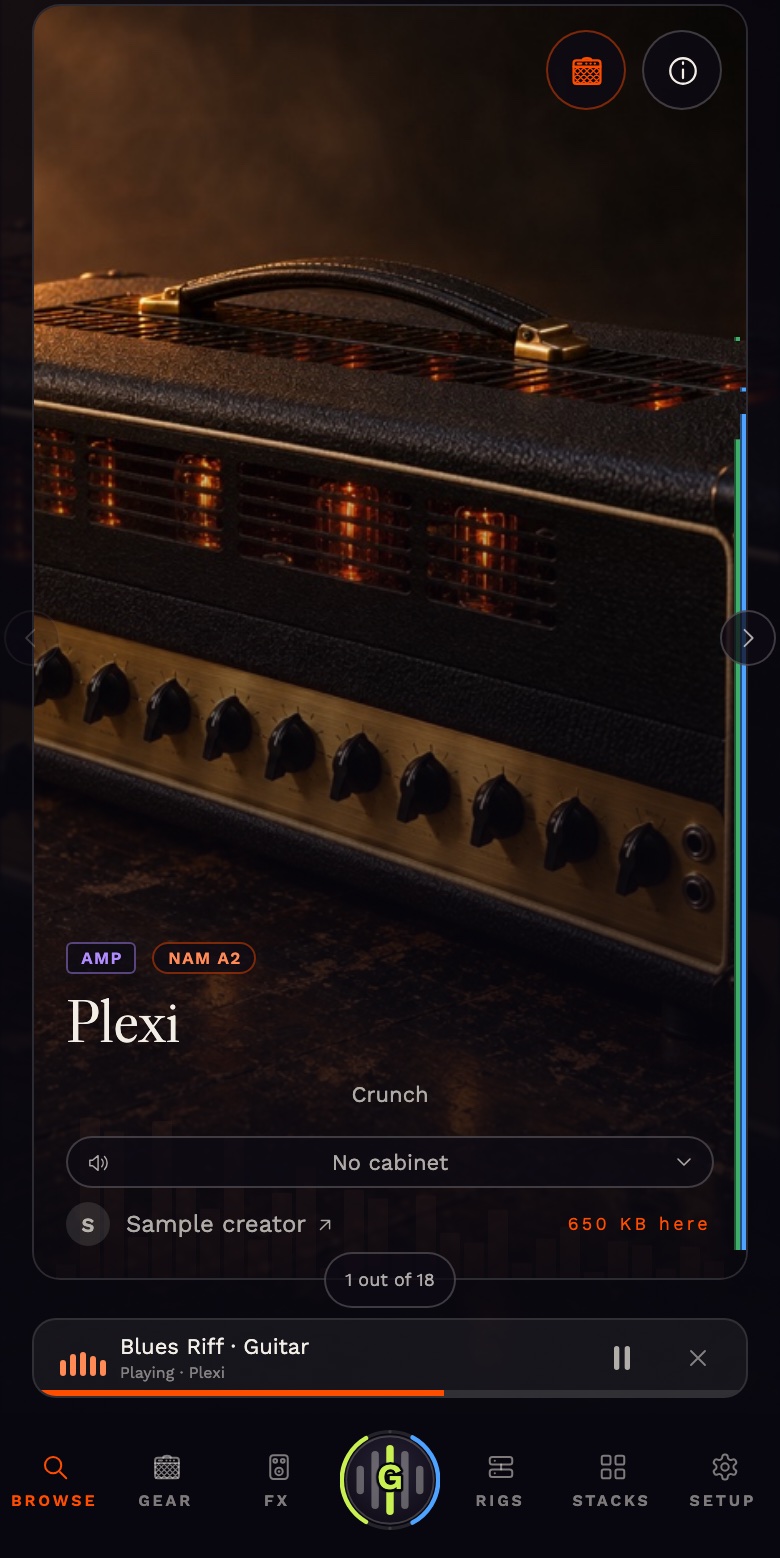
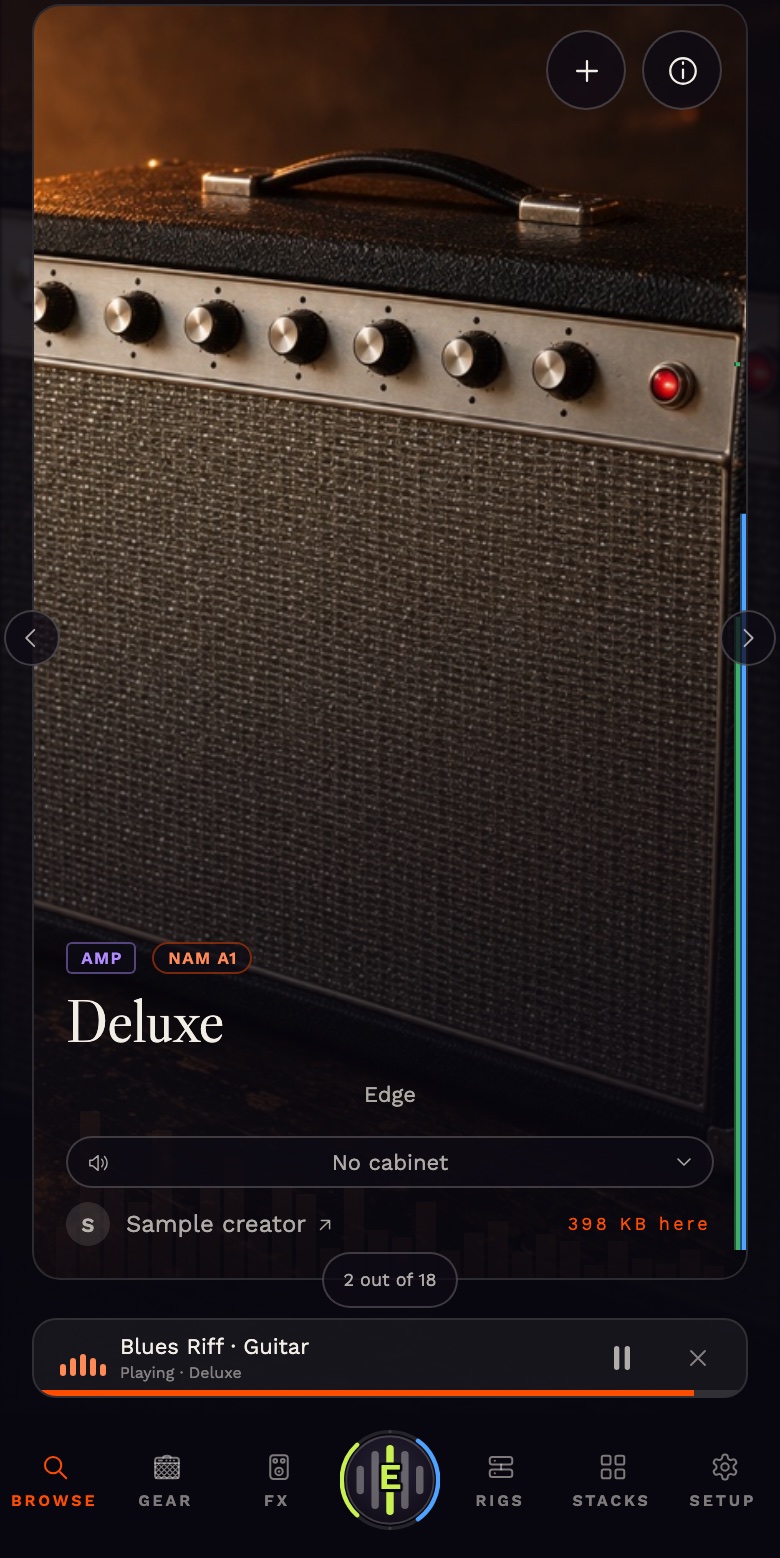
Swipe through the TONE3000 catalogue one full-screen card at a time. The card you land on plays through your own rig. Swipe on and the last download cancels.
- Search and filters. Free text or a pasted tone link. Gear type, NAM or IR, size, tags, makes.
- Variations and companions. Pick a capture from a pack, or the matching cab for an amp.
- Favorites sync with your TONE3000 favorites.
- Your own files. Import NAM captures and IRs on Android.
- A starter library builds tones, rigs and a Stack on first run.
- Amp+Cab
- Amp
- Cab
- Pedal
- Outboard
- Space
- Experimental
Sixteen positions. Twenty-four effects.
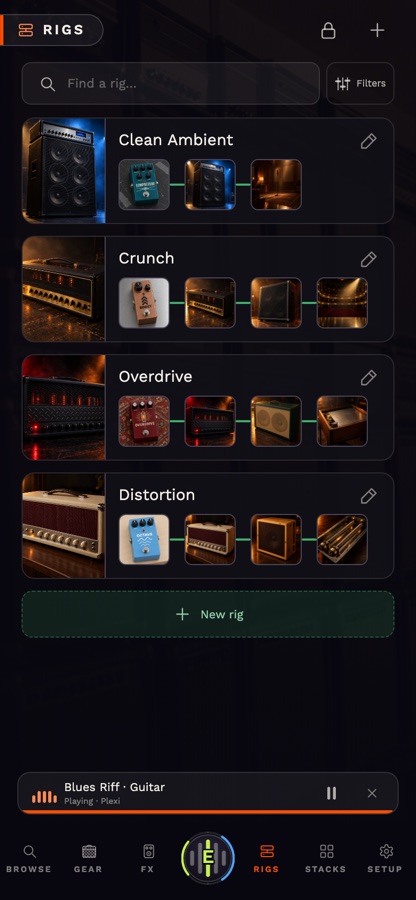
A rig is a chain of captures, IRs and built-in effects, each with its own Mix, Level and side of the stereo field. Tap any effect to hear it over your rig.
- 100 undo steps a rig
- Auto level at −18 dB per position
- Safety limiter at −1 dBFS
- Stereo lanes Left · Both · Right
- Hold and drag to reorder
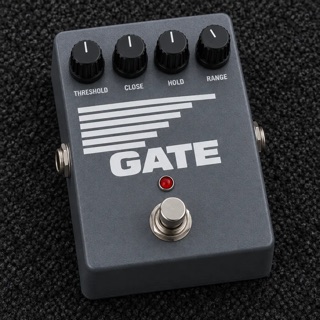 GateThreshold, Close, Hold, Range
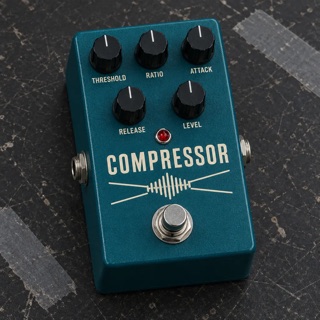 CompressorThreshold, Ratio 1–20, Attack, Release
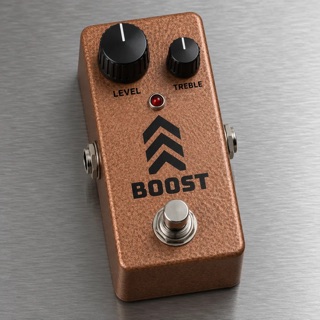 BoostLevel 0–20 dB, Treble
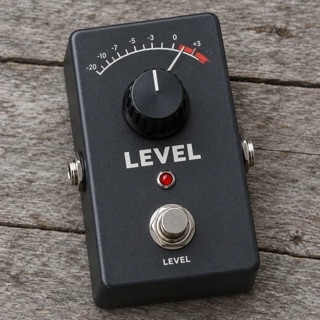 Level±24 dB
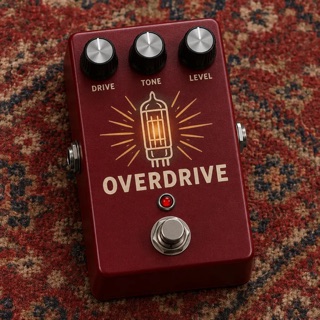 OverdriveDrive, Tone, Level · 4x oversampled
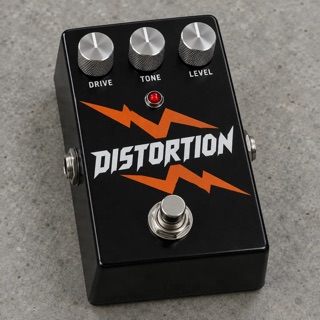 DistortionDrive, Tone, Level
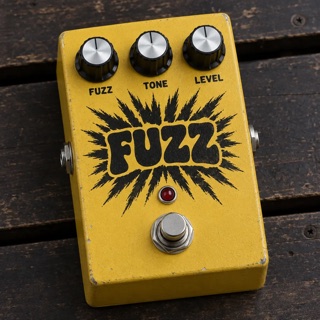 FuzzFuzz, Tone, Level
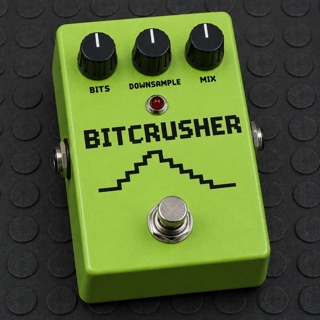 BitcrusherBits 2–16, Downsample 1–32x
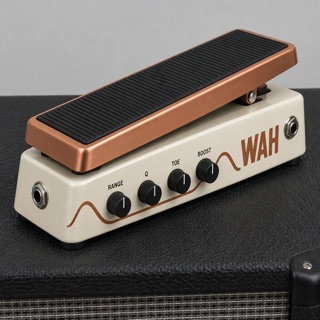 WahModelled on a classic wah · expression target
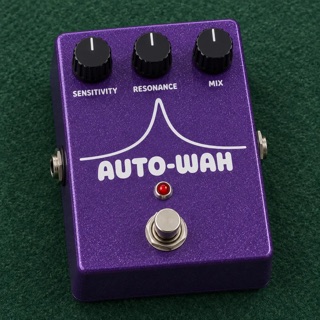 Auto-wahSensitivity, Resonance, Mix
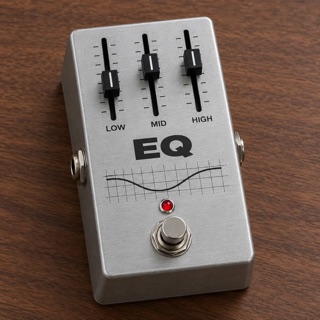 EQLow, Mid, High ±12 dB
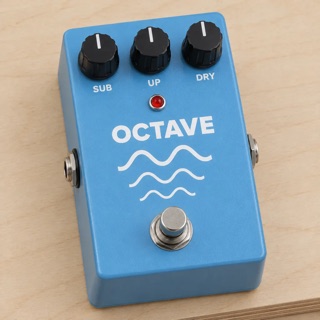 OctaveSub, Up, Mix
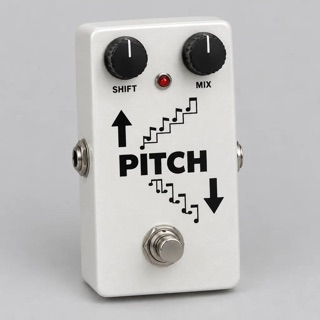 Pitch21 presets
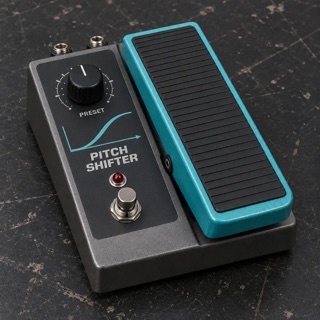 Pitch ShifterWhammy style · Classic or Chords
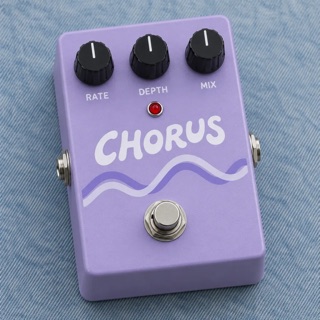 ChorusRate, Depth, Spread, Mix
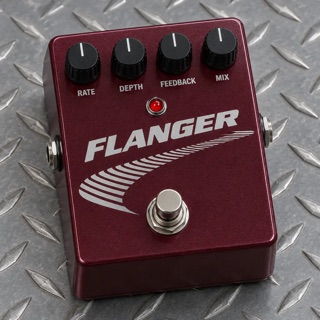 FlangerRate, Depth, Feedback, Spread
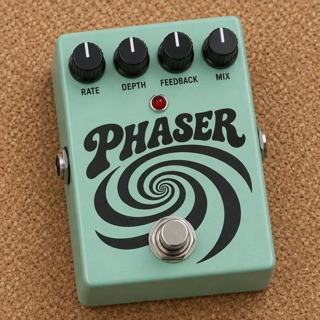 PhaserRate, Depth, Feedback, Spread
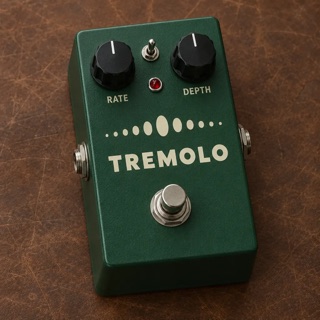 TremoloSine, triangle, square · classic or harmonic
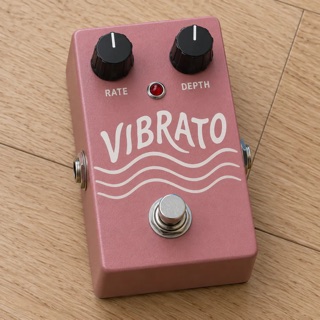 VibratoRate, Depth, Spread
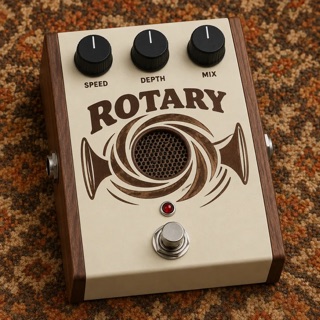 RotarySpeed, Depth, Spread, Mix
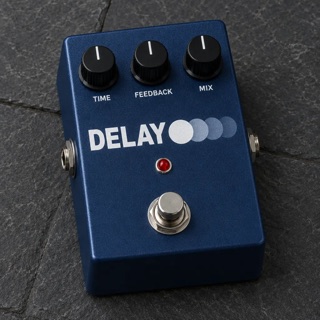 Delay20–2000 ms · syncs to the Rhythm tempo · ping-pong
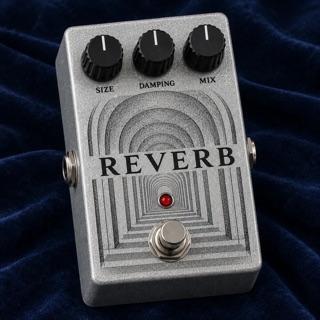 ReverbSize, Damping, Pre-delay, Width
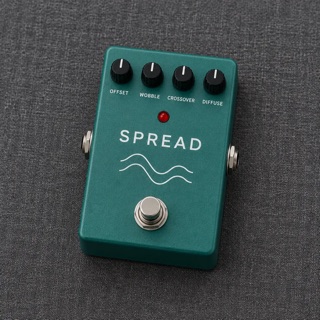 SpreadMono to stereo
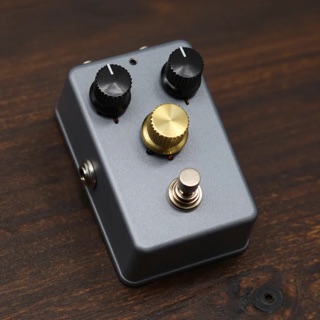 SumJoins two lanes into one
The Pitch Shifter is whammy-style, with 21 presets including a dive bomb, and a Chords mode.
Four rigs. One per footswitch.
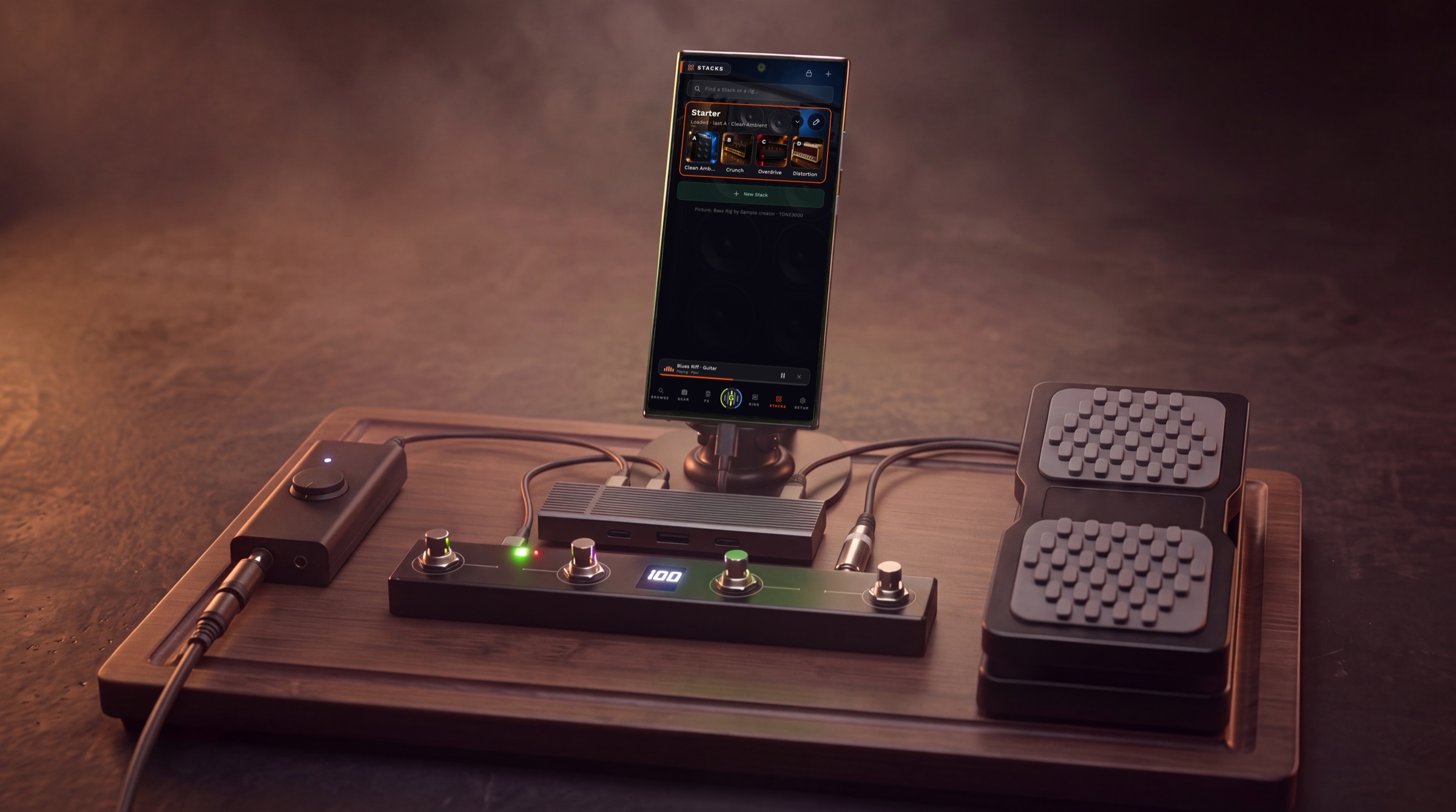
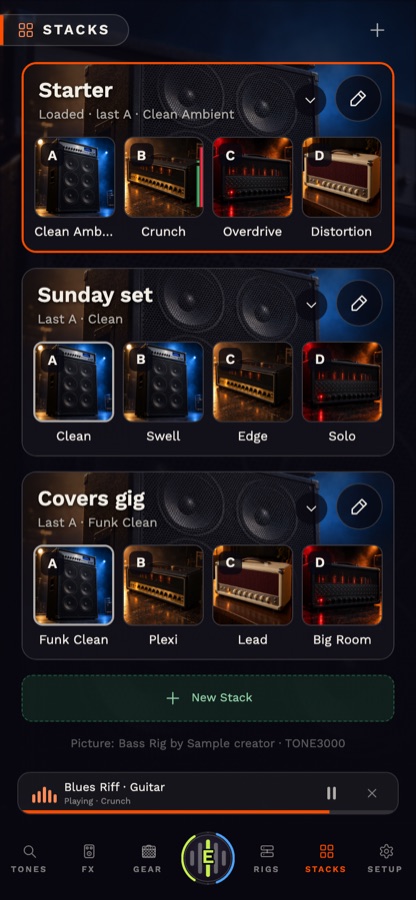
A Stack seats four rigs, A to D. Stomp to switch. Stomp C and D together for the next Stack, A and B for the one before, and the same four switches reach four new rigs. B and C together bring up the tuner, and again put it away. Press the pedal below.
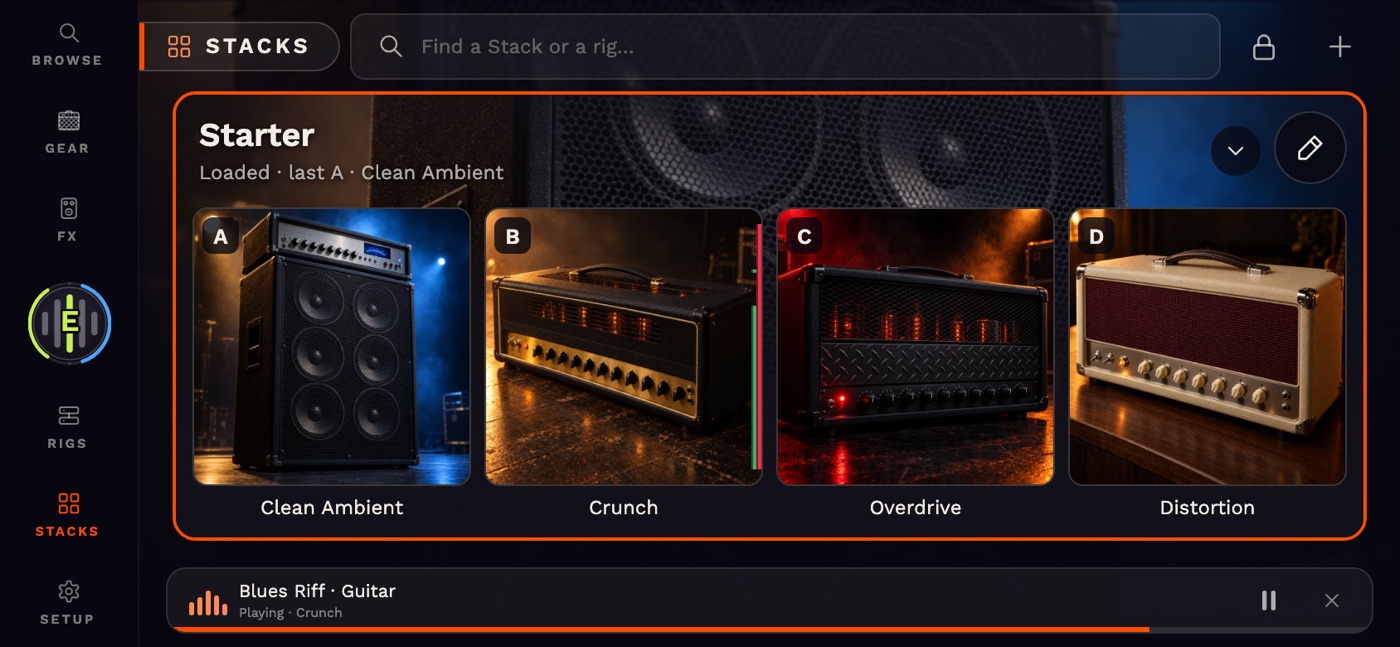
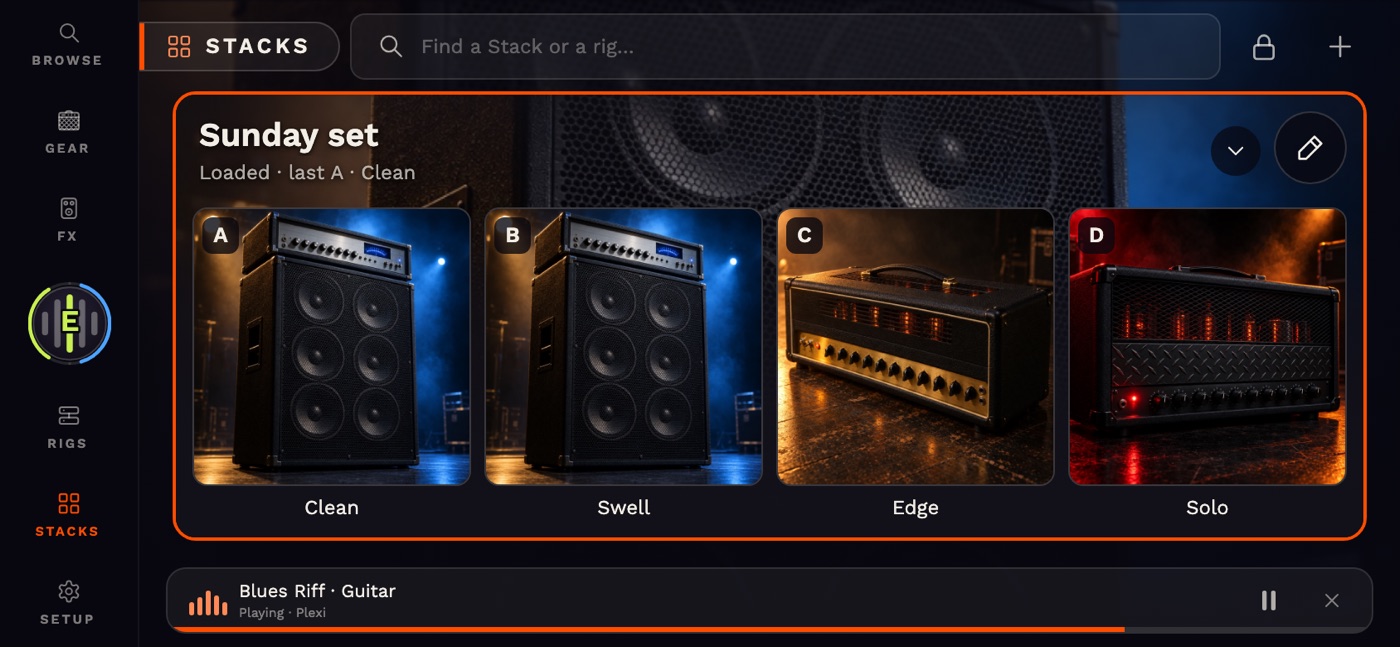
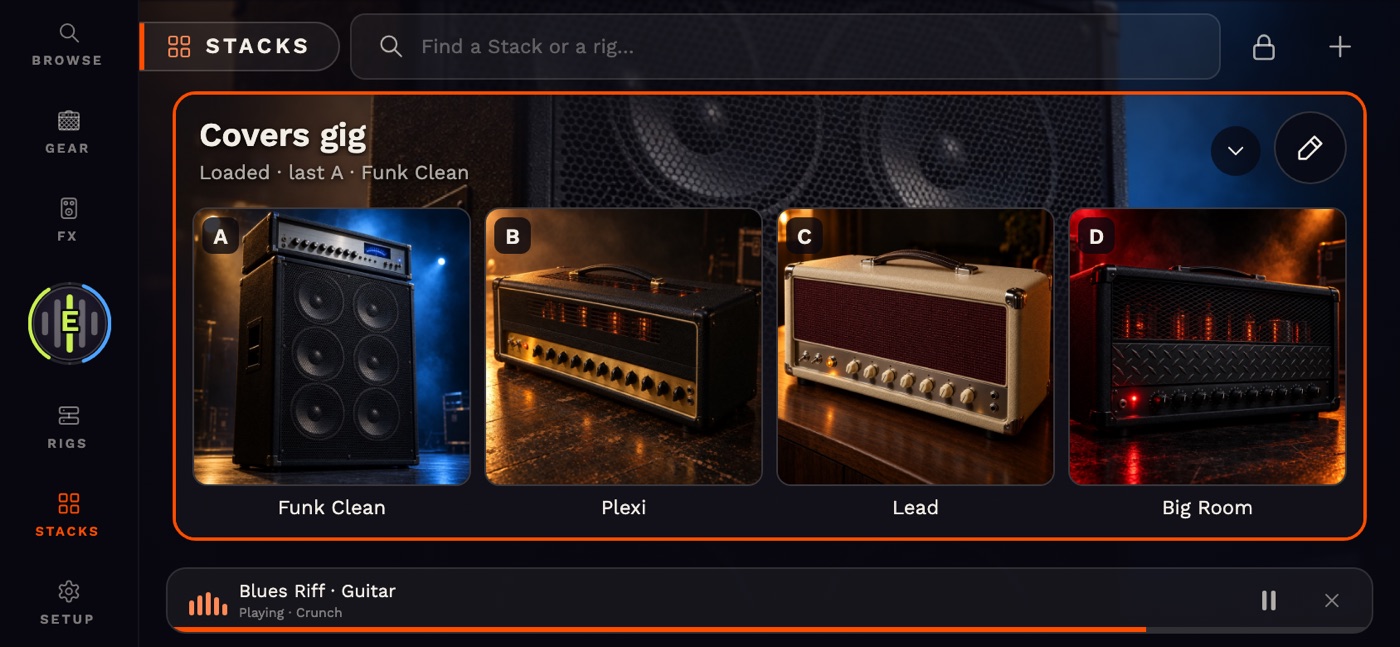
Starter, seat A: Clean Ambient
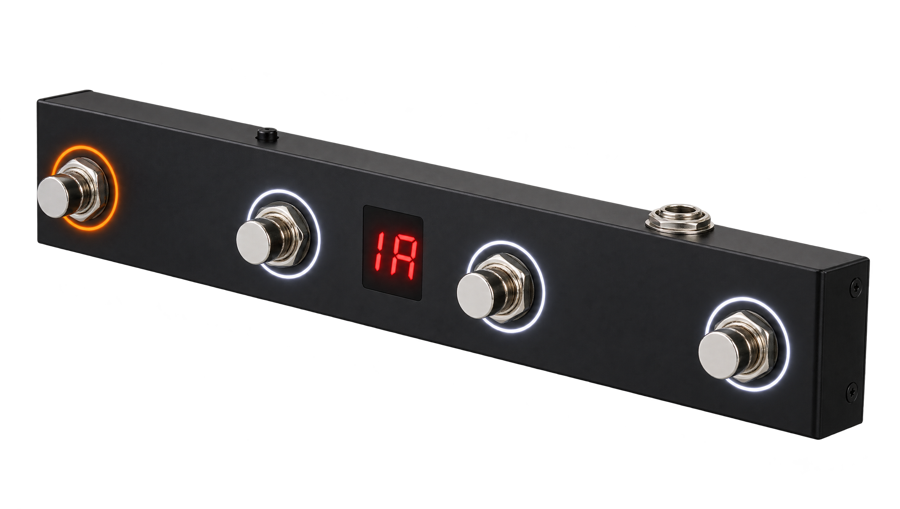
Any MIDI foot controller
USB or Bluetooth MIDI. Stomp a switch to teach it. Program Change works with no setup at all.
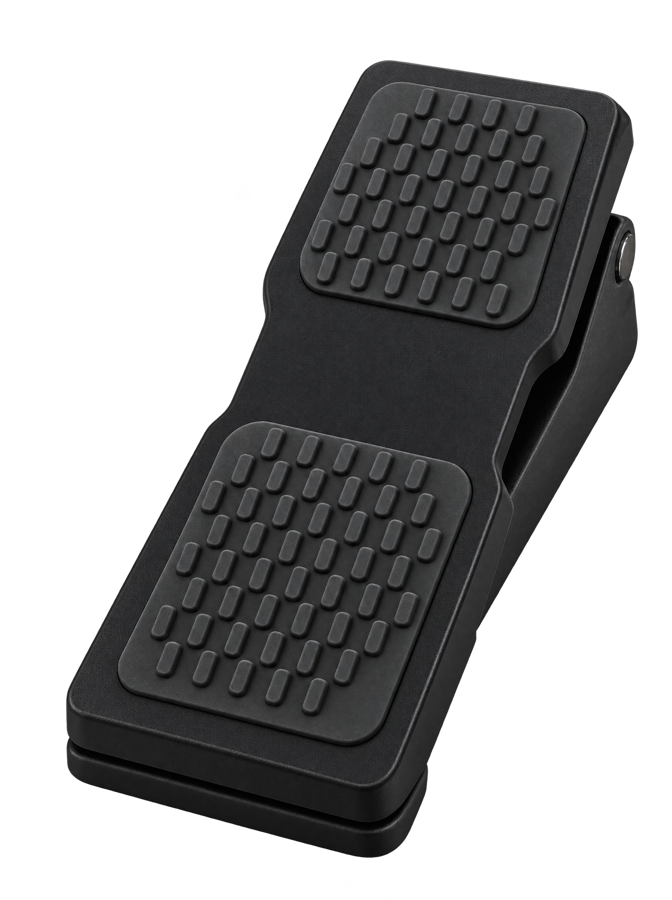
Expression pedal
Rock it once to learn it. Sweep a wah, a volume or a Mix with your foot.
Tuner and the orb
Levels and the note you play, always on screen. Hold the orb, or stomp B and C together, to tune, muted. Reference 415 to 466 Hz.
- Stage lock slide to unlock
- Quiet while playing Do Not Disturb on
- Quick settings from the orb
- Switch jobs seat, step Stack, mute
- 100 Stacks
Two sides to every rig.
AmpHoarder plays in stereo. Spread turns one guitar into a wide one, modulation and stereo IRs keep both sides apart, and every position sits Left, Both or Right. A two-input interface feeds two lanes at once.
- Stereo out or mono when you need it
- Dual mono input
- Side Left · Both · Right per position
- Spread mono to stereo
- Sum joins two lanes
- Stereo cab and space IRs
- Wires show each lane
An interface and a USB-C port.
One USB-C cable to play. Add a hub when your feet want in.
- Guitar into the interfaceA 1/4" mono cable. The interface's knob sets your input gain.
- Interface into the hubUSB-C. AmpHoarder finds it and plays through it.
- Foot controller into the hubUSB MIDI, or Bluetooth MIDI with no cable at all.
- Expression pedal into the controllerRock it once to teach it. It rides any knob.
- Hub into the phoneOne USB-C cable carries audio and MIDI.
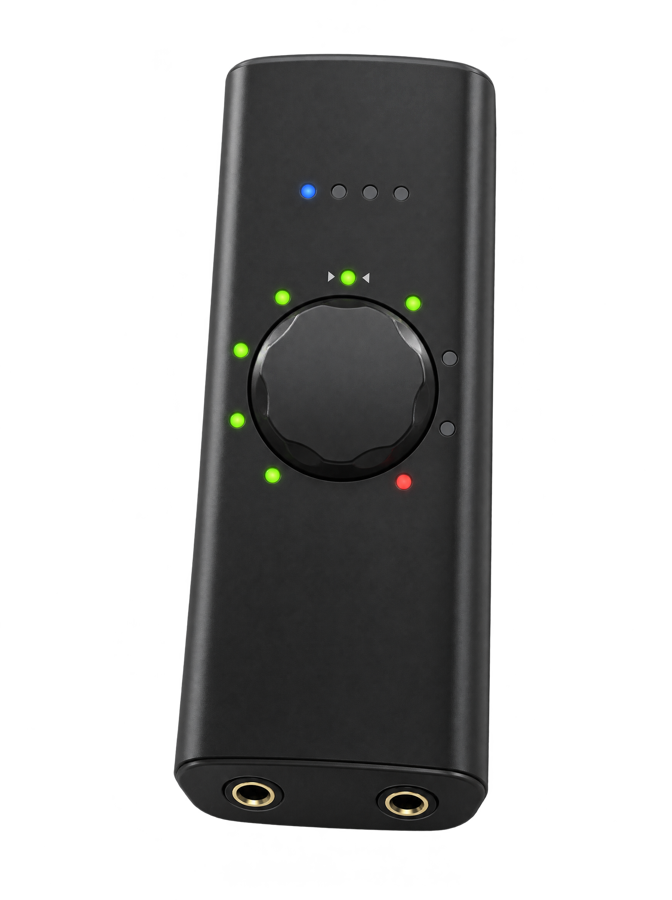
The interface straight into the phone over USB-C. Headphones or an amp out of the interface.
A drummer in the box.
Eleven drum patterns on a recorded rock kit or an electronic one, 40 to 240 BPM, with tap tempo and swing. Delay follows the drummer.
- 35 demo tracks play through your rig, so you hear a tone before you plug in.
- Metronome with meters, subdivisions and accents.
- Looper with layers and pads on your switches. Coming
One app. It lays itself out.
Phone, tablet, browser and desktop, upright or on its side. Same rigs, same Stacks.
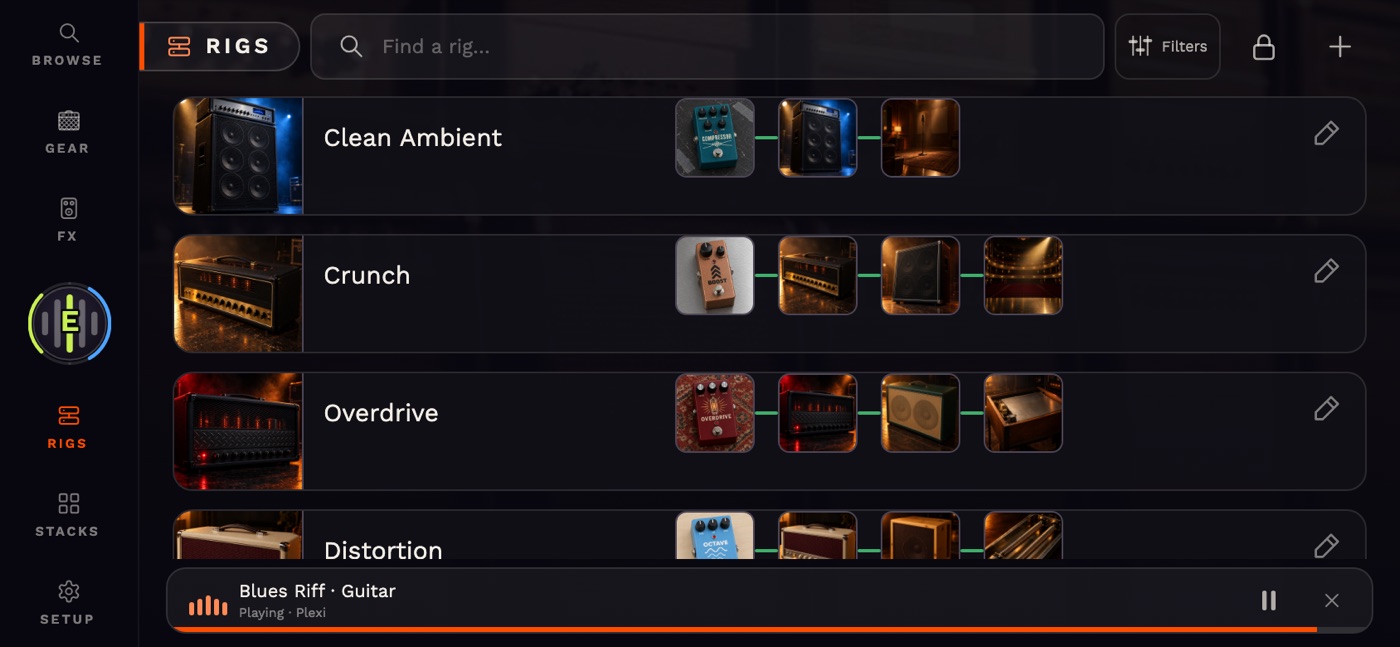
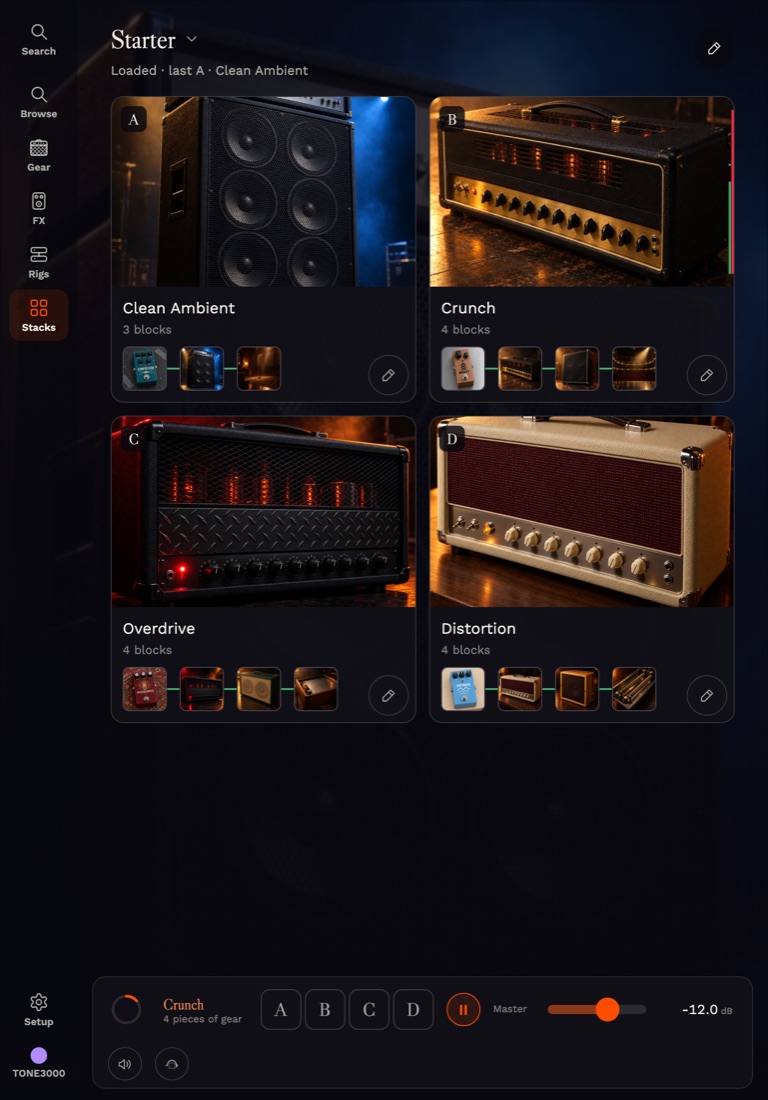
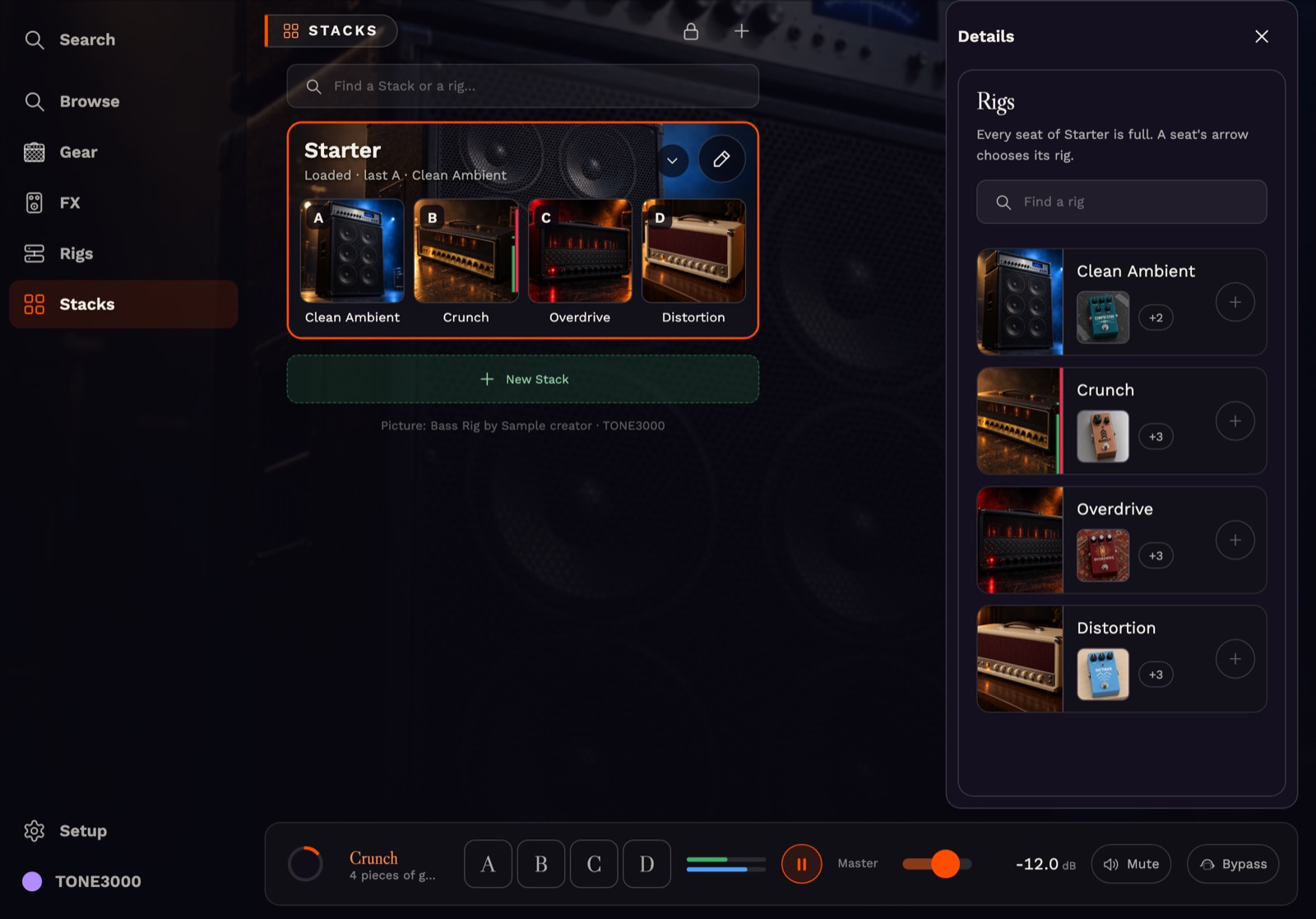
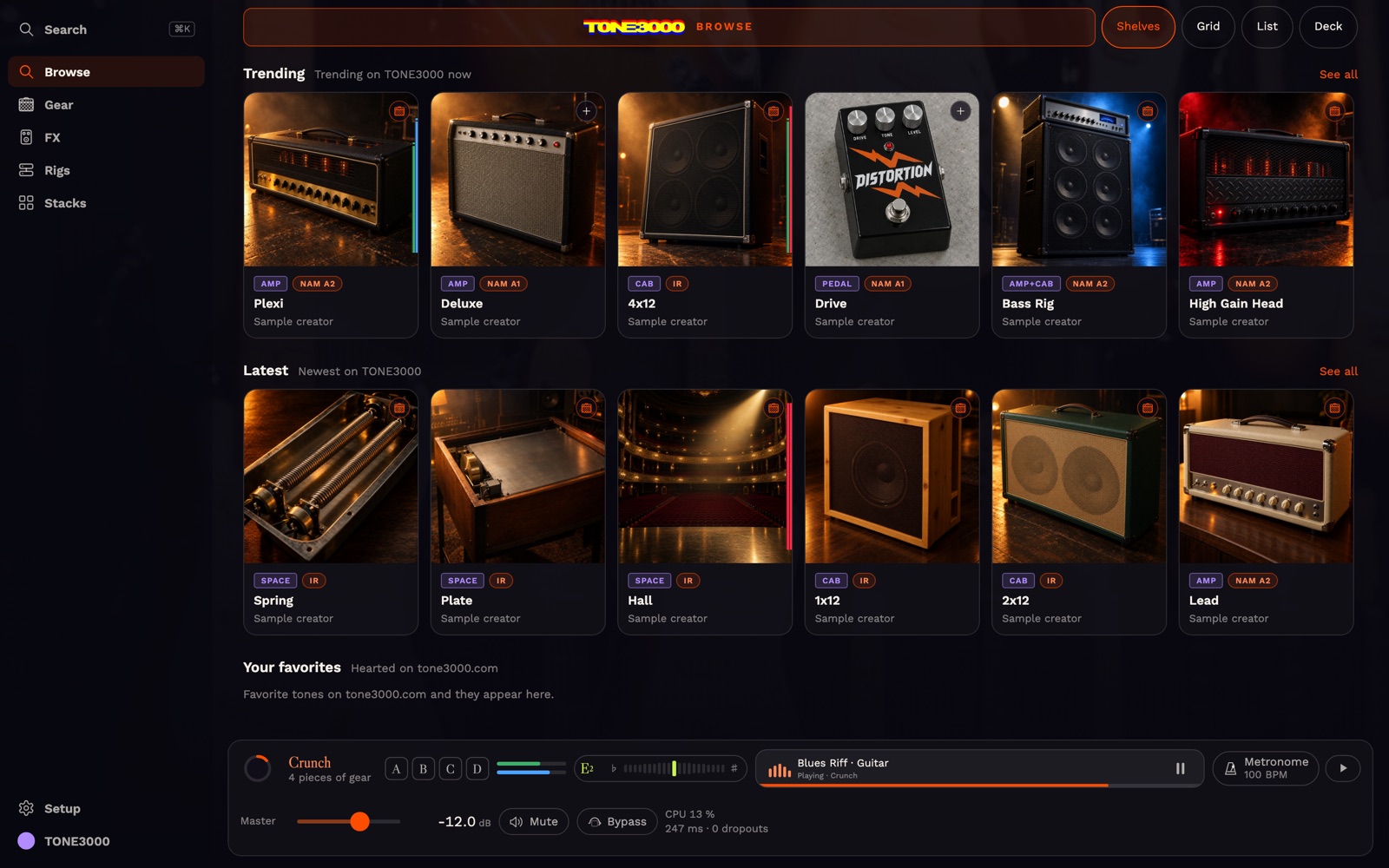
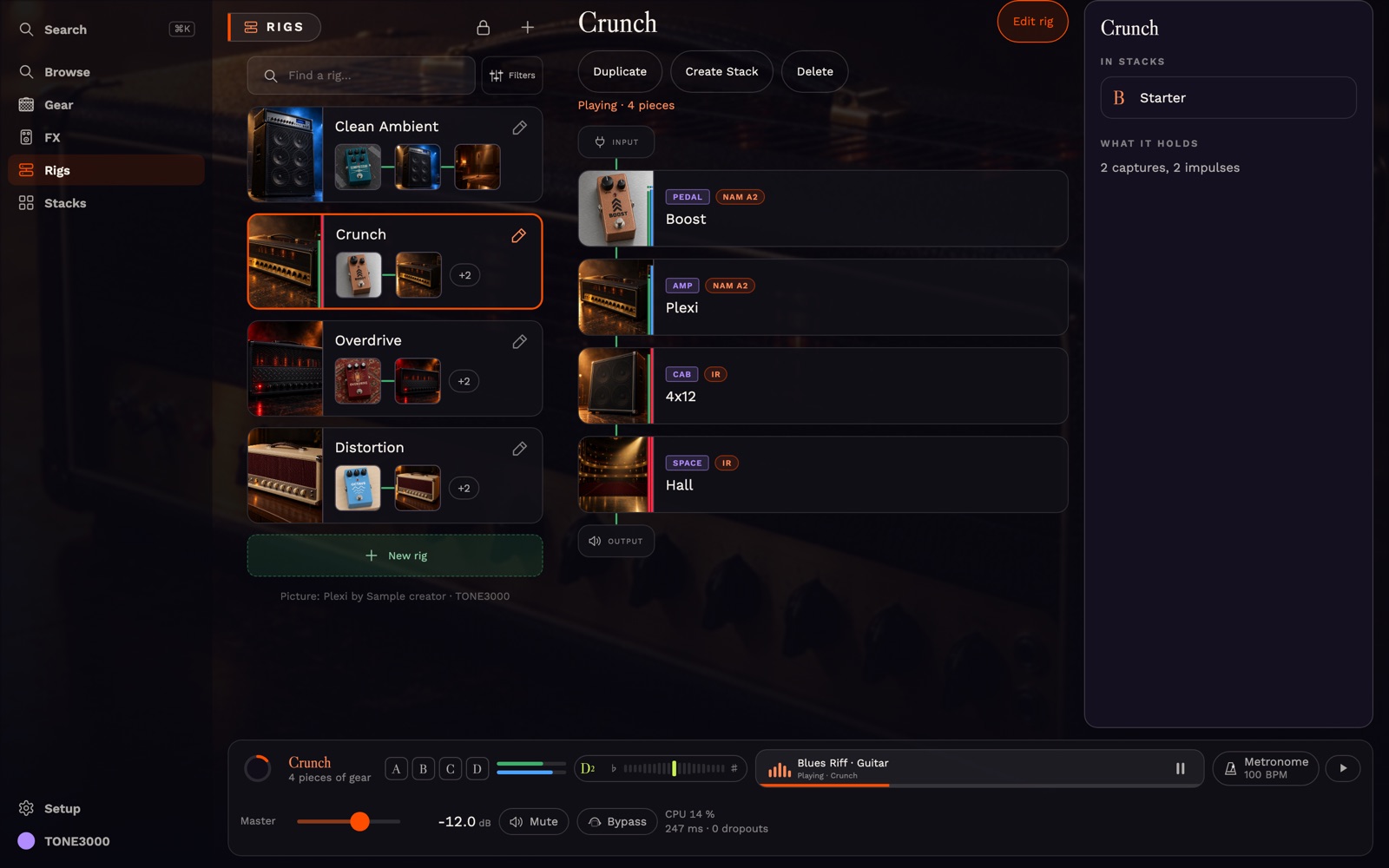
- Android phoneClosed testing
- Android tabletClosed testing
- WebBeta, by invite
- iPhone and iPadIn development
- Mac, Windows, LinuxIn development
Post a rig. Anyone can play it.
Post a rig from the app and it gets its own page. The link opens it in AmpHoarder, or plays it in a browser. A post carries tone ids, never files, so the captures still come from TONE3000.
- Discover shows the newest rigs from everyone, with player search.
- Report and block on every post.
- Player pages and Follow. Coming
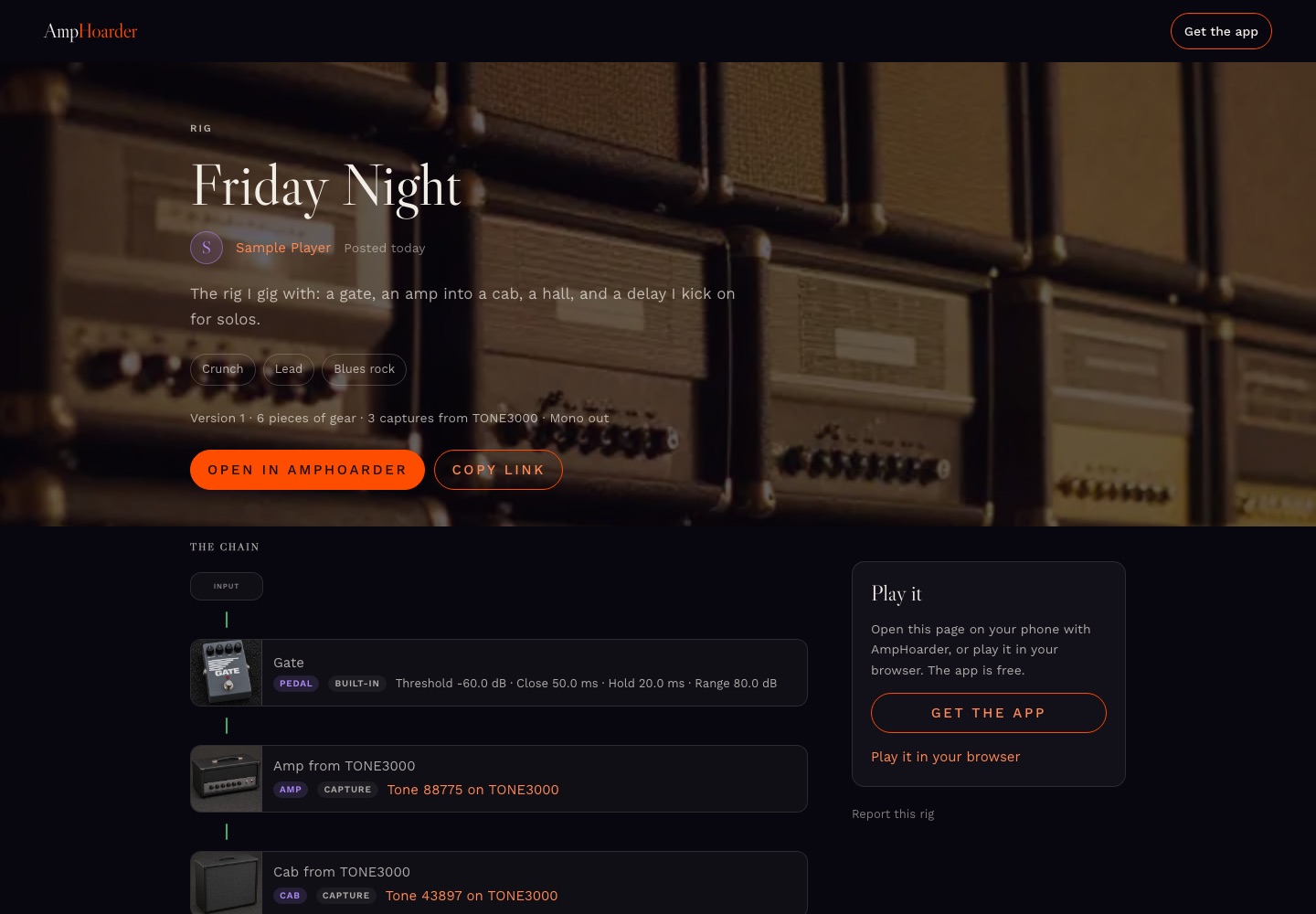
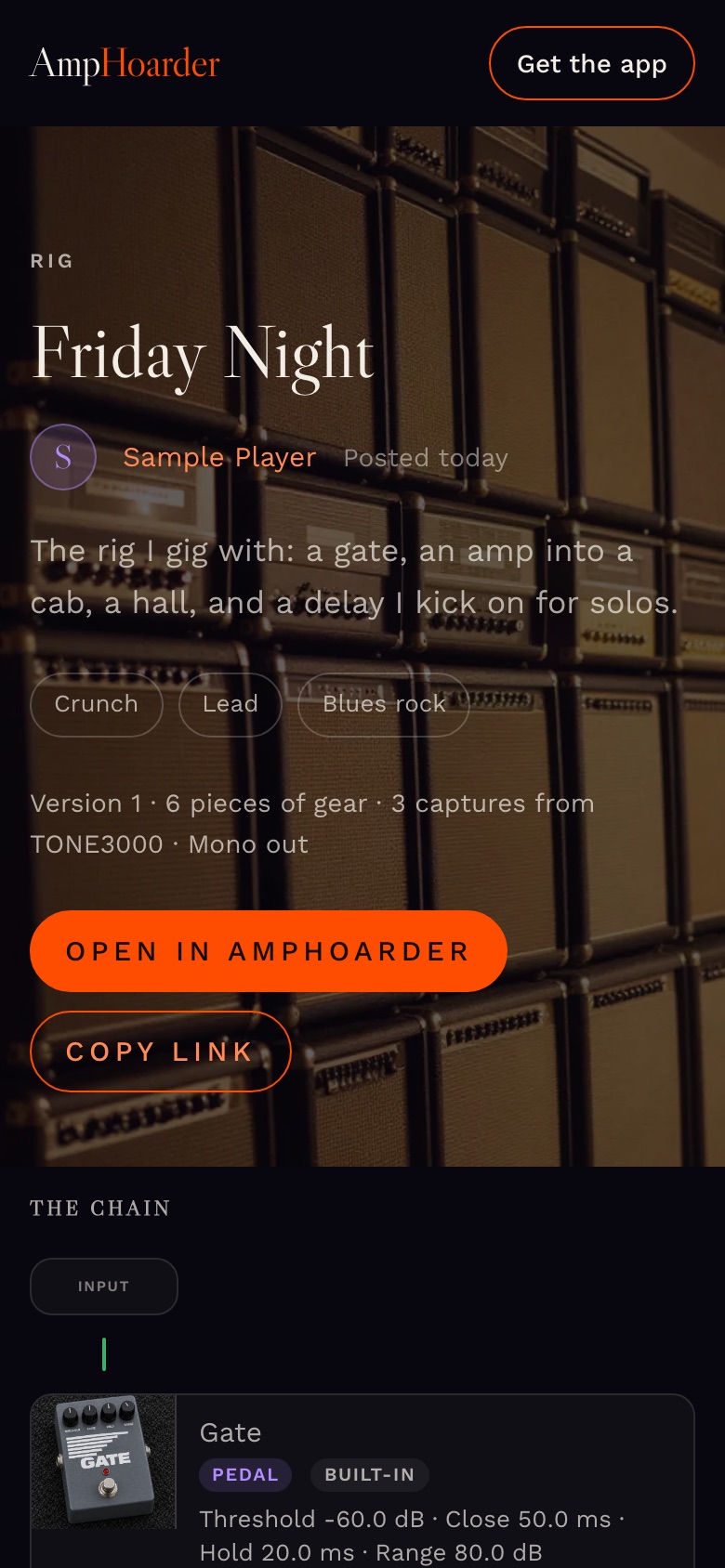
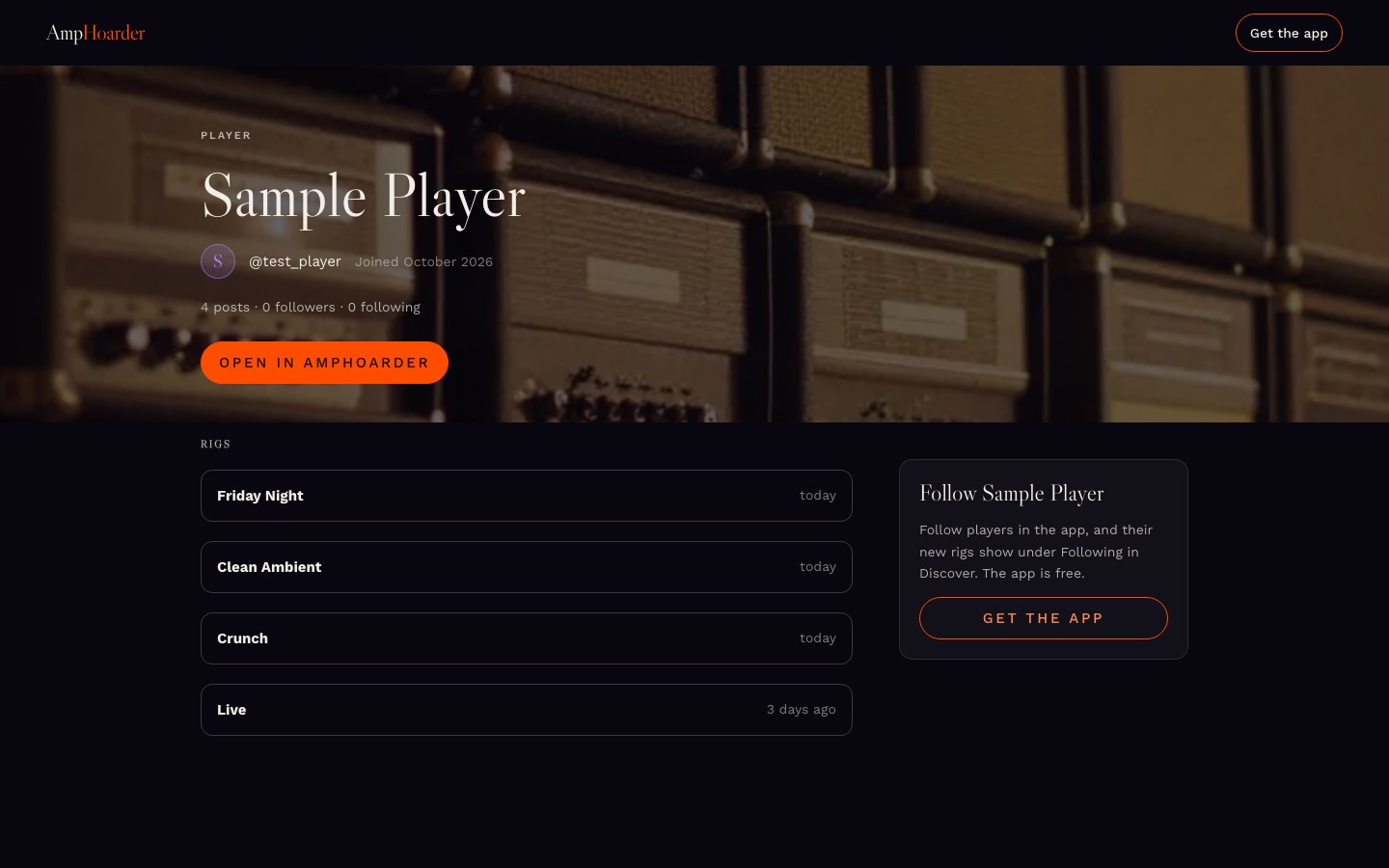
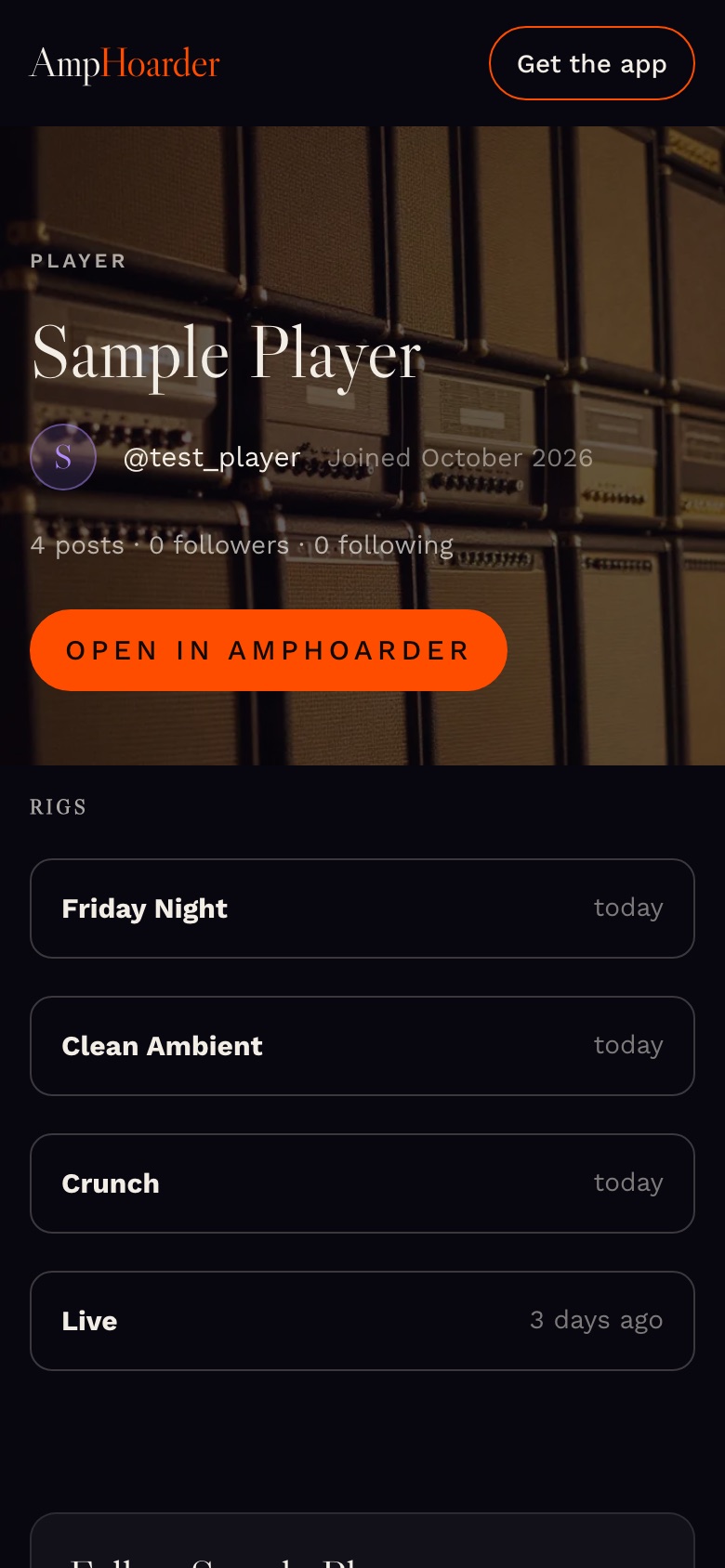
Shown with sample posts.
One Stack. Every screen you own.
Change a rig on the laptop and the phone on your board has it about a second later. Your phone, tablet and browser stay on the same rigs and the same Stacks.
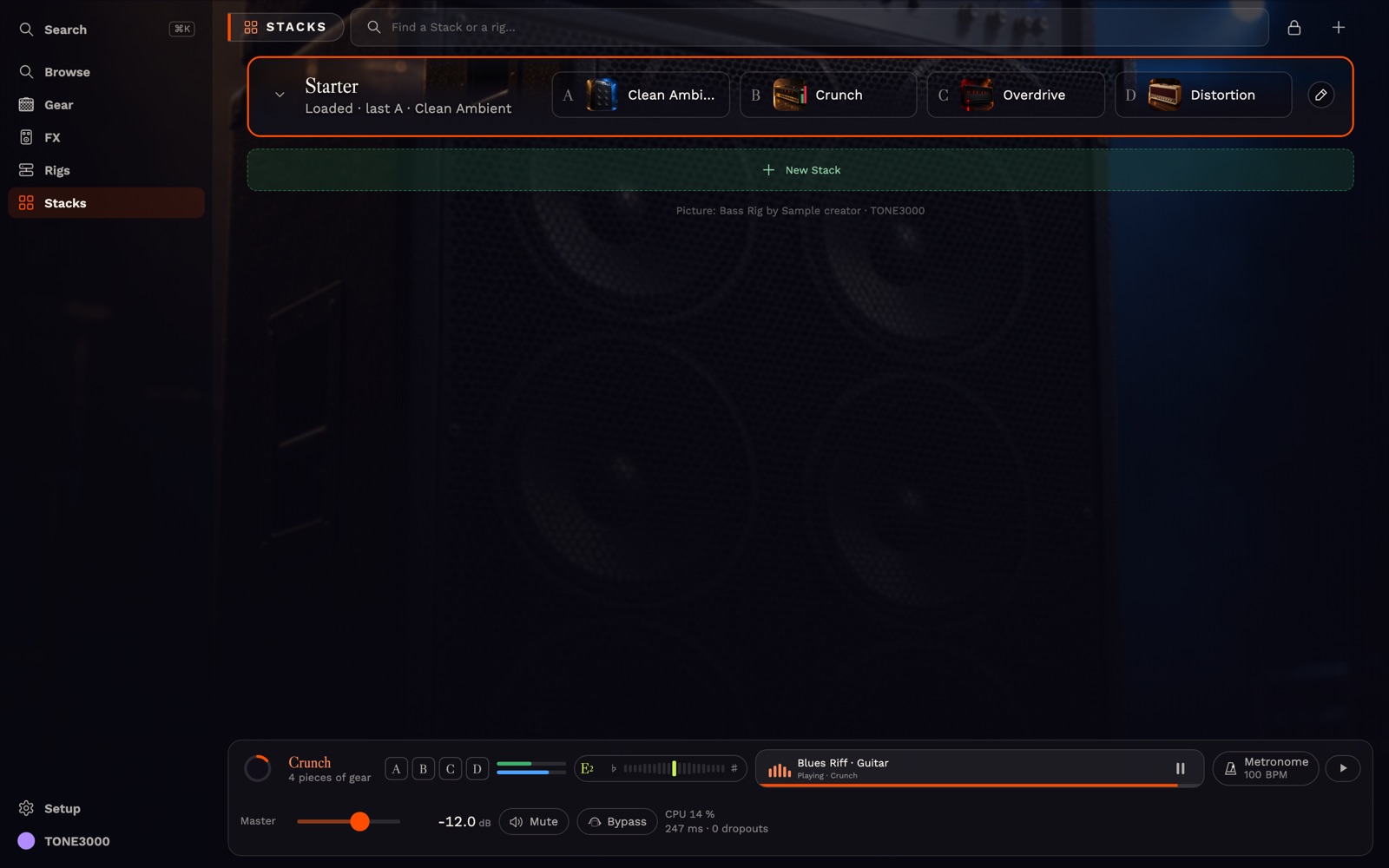
A live channel per player
Each signed-in device holds one secure websocket open to your account. An edit is sent as a small signal on it, and every other device you have open picks it up within about a second. No polling, no refresh.
Merged, never asked
Every rig, Stack and piece of gear merges on its own. When two devices changed the same one, the newer edit wins and the other is kept in history, so nothing you made is lost.
Quiet on stage
A change to the rig you are playing lands with the usual crossfade. While the stage lock is up, it waits until you leave it.
Today: your rigs, Stacks, gear and settings back up to your account every few seconds, and restore on another device. Beta
No ads. No tracking. Free.
The app carries no ads, analytics or telemetry SDKs, and asks only for the permissions it plays with.
Backup with undo
Rigs, Stacks, gear and settings back up to your account every few seconds. A restore can be undone. Beta
One free account
Sign in with Google or an email link. Delete the account from inside the app, any time. Beta
Made for everyone
Screen-reader labels throughout. The orb reads its levels aloud. Reduce motion turns the movement off.
The numbers.
Measured on a current flagship Android phone, Snapdragon 8 Elite.
Audio
- Round trip, Direct USB
- 7.08 ms median · 48 kHz, 48-frame callbacks
- Round trip, standard Android audio
- 18.4–21.5 ms
- Sample rates
- 44.1, 48, 96 kHz (set by the device)
- Buffer sizes
- 48, 64, 128, 256, 512 frames
- Agreement with the NAM plugin
- 122–157 dB WaveNet · 48–59 dB LSTM
- Safety limiter
- −1 dBFS ceiling, 120 ms release
- Levels
- Input ±12 dB · master −40 to +6 dB · per position −24 to +12 dB
Capacity
- Positions per rig
- 16
- Full A2 captures at once
- 4
- Light A2 captures at once
- Up to 16
- One capture, CPU
- A1 standard 41% · A2 40% · A2 Light 8.6% of a block
- Four A2 captures, CPU
- 27–31% mean
- Library
- 100 gear, 100 rigs, 100 Stacks
- Undo
- 100 steps a rig
- Capture file size
- Up to 25 MB
Captures
- NAM A1 WaveNet
- Standard, Lite, Feather, Nano
- NAM A2
- Full and Light
- NAM LSTM
- 1x16 and 2x8
- Cab IRs
- Mono or stereo, up to 4,096 taps, 8–192 kHz
- Space IRs
- Up to 10 seconds
- Capture sample rate
- 48 kHz
Tools
- Tuner
- Needle, Bars or Strobe · ±50 cents · reference 415–466 Hz
- Rhythm
- 40–240 BPM · tap tempo · swing 50–75% · 11 patterns
- Backing track
- Up to 120 s
- MIDI
- USB and Bluetooth MIDI · Program Change with no setup
- Health readout
- Latency, DSP load and memory, with warn and hot levels
Plug in tonight.
AmpHoarder is in closed testing on Google Play, and the web app is in beta by invite. Opt in with the Google account you use on the phone. Android 12 or newer.
Join closed testing